Tips from the Field
Agronomy Update | Water Hardness
Water functions as the primary carrier in most herbicide applications, so its physicochemical properties can directly influence spray solution compatibility, active ingredient availability, foliar uptake, and ultimately weed control. Elevated concentrations of hardness cations such as calcium, magnesium, iron, or sodium can antagonize weak-acid herbicides by forming less-available herbicide-cation complexes, while high bicarbonates can further reduce performance and complicate tank mixing for certain actives.
Ask: Is my water hard? Are bicarbonates high? Is pH suitable for this tank mix? Is the water clean enough to avoid tie-up from sediment or organic material?
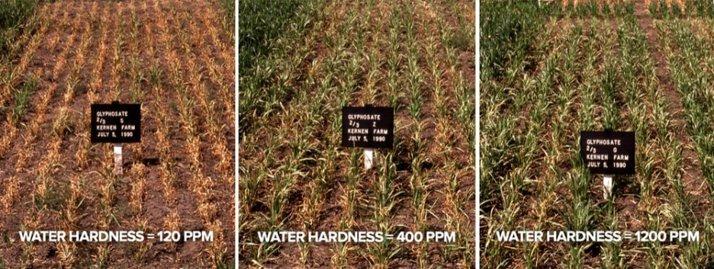
Impact of glyphosate efficacy applied at 2/3 of label rate with differing total water hardness. Courtesy: Les Henry
Water Conditioners
AMS-based water conditioners are especially important with glyphosate and Group 1 "dim" actives such as clethodim and tralkoxydim, where hard water and bicarbonates can reduce performance. AMS is generally a good fit with Groups 1, 4, 9, 10, and 27 and can often be used at higher rates without crop injury concerns. A product like Keystone Electra WC fits well within a herbicide program.
Tank-mix Order Matters
Add AMS-based conditioners first so the water is conditioned before herbicides are added. The table below shows recommended Electra WC rates based on total water hardness.
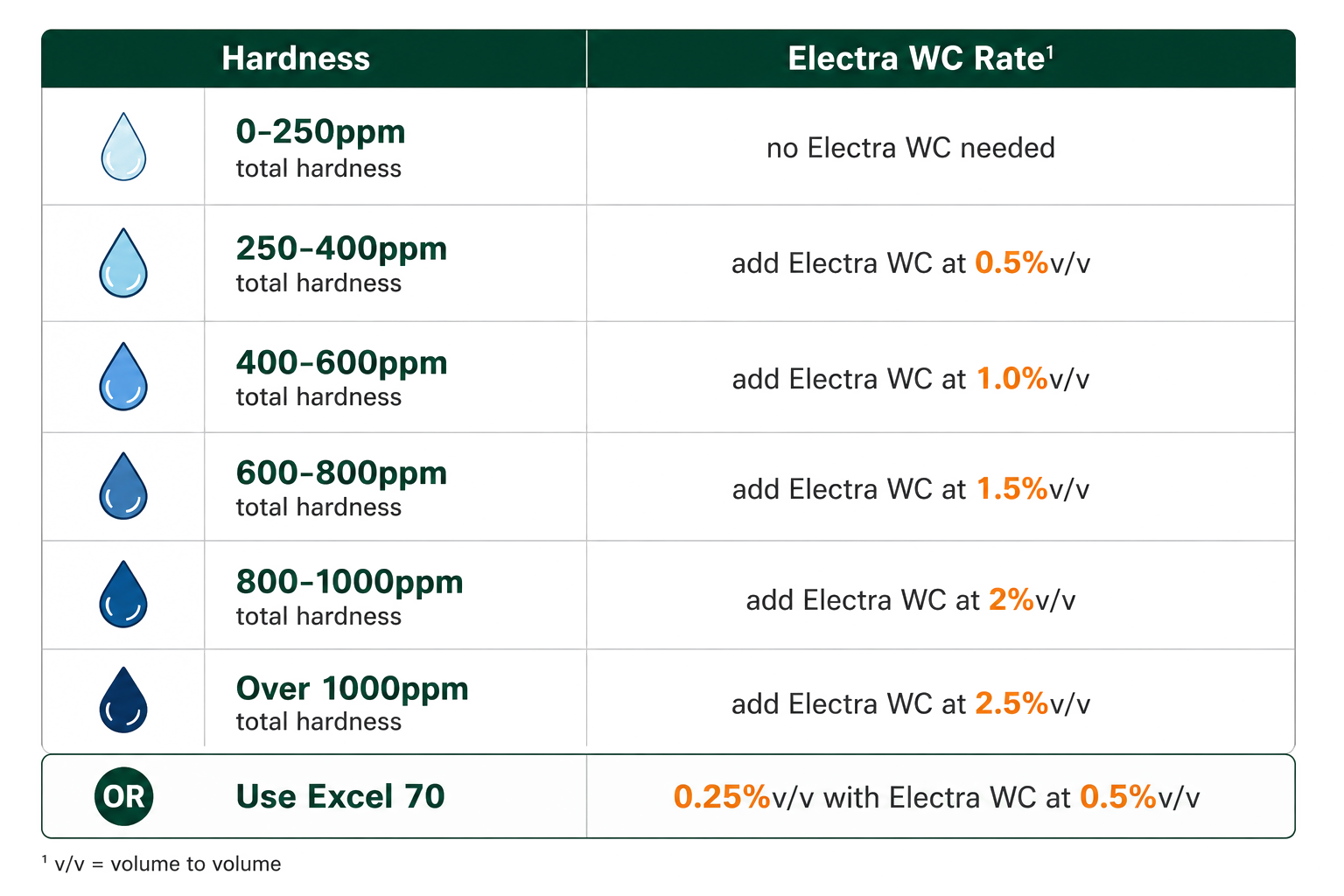
Water quality matters! Ask a local UFA team member about water quality testing.
Want this resource as a PDF?