Tips from the Field
Agronomy Update | Water pH
Water functions as the primary carrier in most herbicide applications, so its physicochemical properties can directly influence spray solution compatibility, active ingredient availability, foliar uptake, and ultimately weed control. Spray solution pH also affects herbicide ionization, solubility, and stability, which can either improve uptake or accelerate degradation depending on chemistry. Agronomically, these water quality constraints can translate into slower activity, reduced consistency, and lower overall efficacy across the field.
Ask: Is pH suitable for this tank mix? Is the water clean enough to avoid tie-up from sediment or organic material?
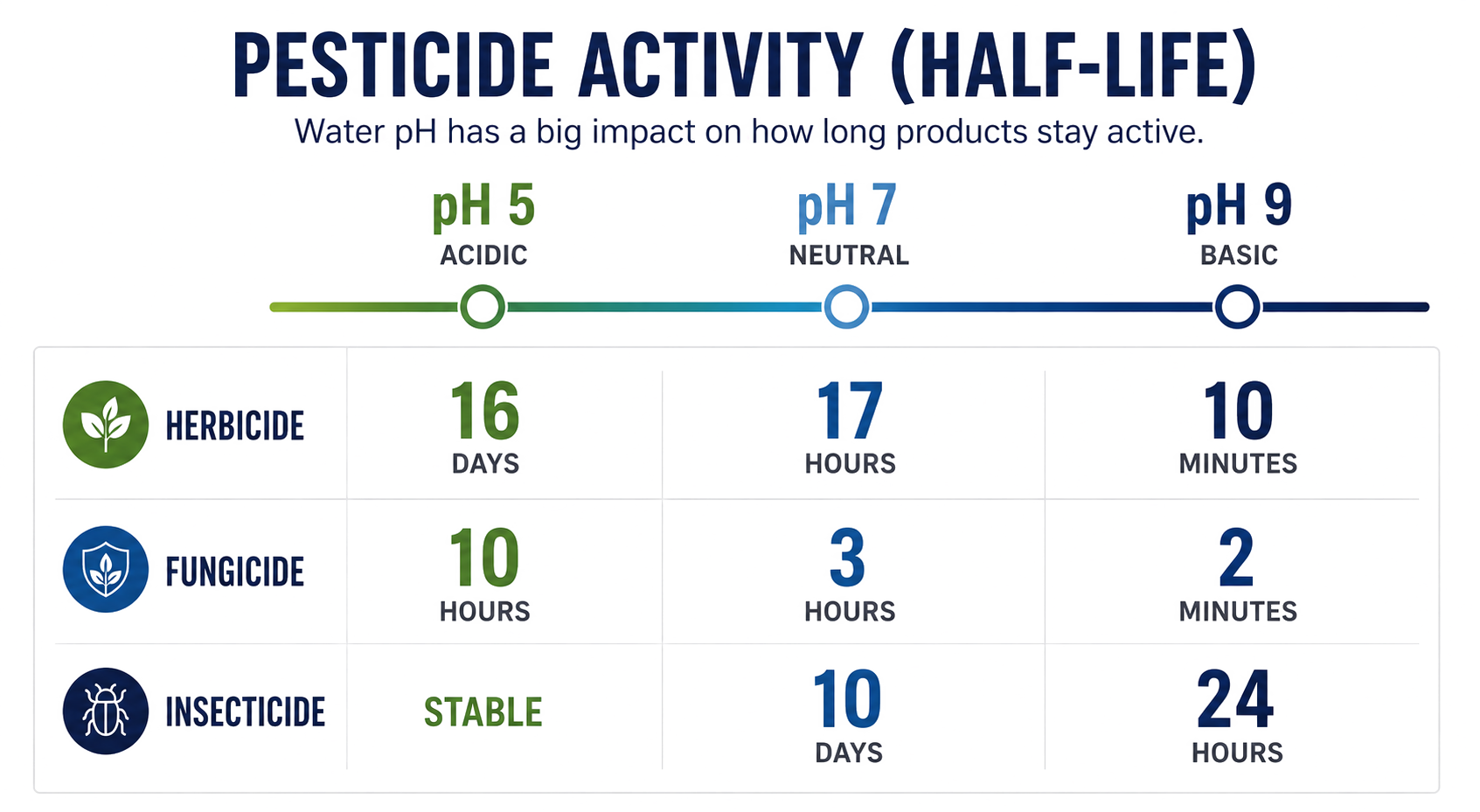
Pesticide half-life based on solution pH. Courtesy: NC State Extension
pH Adjusters
Test the spray solution with a pH meter, since some herbicides already move the pH into a suitable range. The best fit for pH adjusters is often broad-spectrum burndown programs such as pre-seed, pre-harvest, and post-harvest applications. Lowering pH can help reduce hard water antagonism with glyphosate by limiting calcium tie-up. A product like Keystone Excel 70 can lower solution pH, which may improve performance of glyphosate, diquat, and weak-acid herbicides such as 2,4-D amine and dicamba.
When Not to Use
Do not use with sulfonylureas, many Group 2 herbicides, and some Group 27 products where reduced pH may hurt performance. Many pH adjusters are also not generally recommended to be used, or needed, with fungicides or insecticides.
Tank-mix Order Matters
Add pH adjusters last at a typical rate of 0.25% volume to volume (v/v). Always read and follow label directions for all tank-mix partners and confirm that reduced pH will not negatively affect performance or crop safety.
Bottom Line
Testing and correcting spray water is one of the easiest ways to protect herbicide performance. Matching the right conditioner to the water source and tank mix helps keep active ingredients available, improves consistency, and supports better weed control across the farm.
Water quality matters! Ask a local UFA team member about water quality testing.
Want this resource as a PDF?